The Post-Cold War Thriller and What It Lost
For forty years, the nuclear thriller had a clear architecture. Two superpowers. Competing ideological systems. The bomb as the extreme endpoint of a conflict both sides were, at some level, trying to manage. Tom Clancy built an entire career on the tension inside that structure â the mechanisms of deterrence, the protocols that kept the unthinkable from happening, the specific technical details of how both sides had organized themselves around avoiding catastrophe.
When the Cold War ended, the genre lost its organizing logic. The enemy state was gone. The ideological clarity â such as it was â dissolved. Thriller writers spent the 1990s and early 2000s cycling through replacement villains: rogue states, terrorist networks, stateless actors. Some of it worked. A lot of it felt like genre mechanics running without a real engine underneath.
What the best contemporary political thrillers have done is find the new logic. Not a replacement for Cold War structure, but a genuine reckoning with how catastrophic threat actually operates in a networked, post-unipolar world.
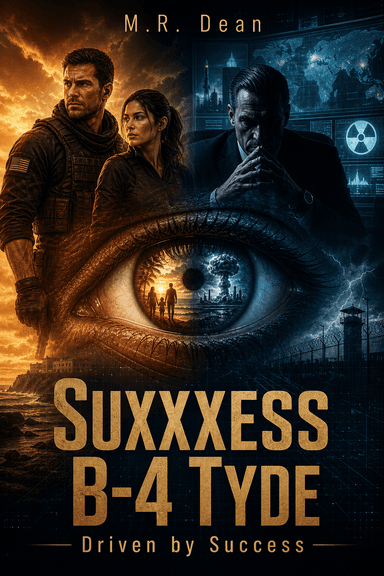
Suxxxess b-4 Tyde is that reckoning.
Why Nuclear Threat Still Works as Fiction in 2025
The nuclear threat has never actually gone away. It has proliferated, diffused, and in some ways become more dangerous precisely because the institutional architecture that contained it during the Cold War has degraded. There are more nuclear-capable actors than there were in 1989. The command-and-control infrastructure is less stable. The lines of accountability are blurrier.
In fiction, this means the nuclear thriller doesn't have to be a Cold War throwback to be current. It has to find the actual shape of the contemporary threat â which is not a state-to-state exchange but something more distributed, more improvised, more dependent on individual actors operating in the gaps between jurisdictions.
Plutonium acquired through a Russian arms dealer. A criminal genius running the operation from a federal prison cell. Weapons being assembled not by a military-industrial complex but by a network that Tyde has built specifically to be distributed â so that no single node, if captured, unravels the whole thing.
That is the shape of catastrophic threat in 2025. That is what M.R. Dean is writing.
Tyde's Operation: How the Threat Architecture Works
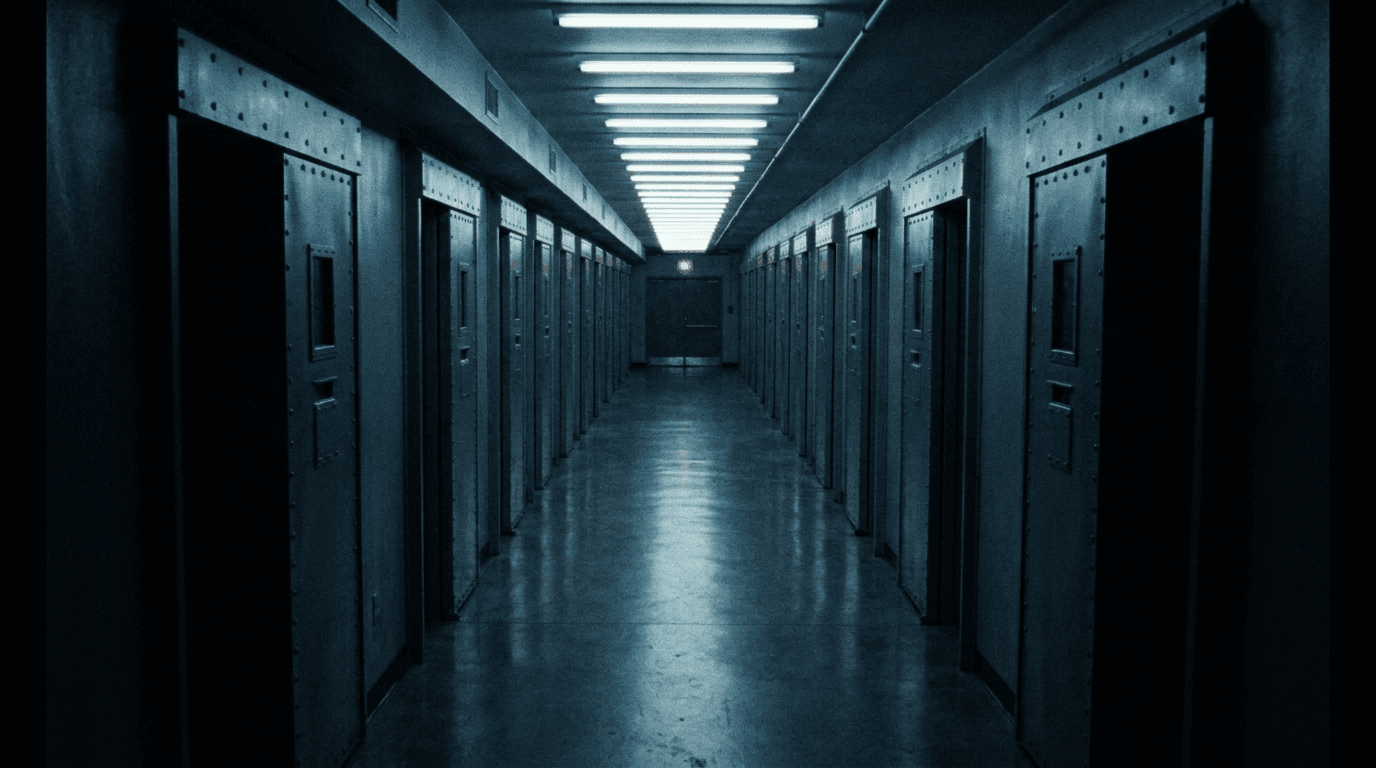
The genius of Vick Tyde as a villain is not that he is powerful. It's that he has made himself powerful within the specific constraints of his situation. He is in a maximum-security federal prison in Sioux Falls, South Dakota. He has, in theory, no access to the outside world that isn't monitored and controlled.
In practice, he has built something considerably more sophisticated than most people operating from full freedom.
Elektra â his wife â handles the outside operations. She is the interface between Tyde's intelligence and the logistics required to execute it. The acquisition of plutonium runs through Vlademir Ivanoff, the Russian arms dealer who doesn't know â or doesn't care â about the full scope of what he's enabling. Diamond and Beast maintain Tyde's internal prison power structure, ensuring that his authority inside the institution is absolute. Mrs. Cali provides capabilities that Tyde specifically recruited for, understanding that in an environment as controlled as a federal prison, you use every available resource.
"You make that shake, and I'll make this whole prison shake." (Vick Tyde, Ch. 51)
That line is not metaphor. Tyde is describing the actual stakes: his internal power is connected to his external operation. What happens inside the prison walls is not separate from the global threat. It's the foundation of it.
This is sophisticated threat architecture. It's not a supervillain monologue. It's a description of how a genuinely intelligent criminal mind has organized itself for maximum effect within maximum constraint.
The Secretary of Defense Scene (Chapter 59)
"If Tyde does manage to get out and get ahold of the materials he needs, it could be the start of World War III." (Secretary of Defense, Ch. 59)
The Secretary of Defense doesn't say this dramatically. That's what makes it land. By Chapter 59, the reader has spent almost four hundred pages understanding exactly how Tyde operates â the intelligence, the patience, the distributed structure, the specific capabilities of each person he has recruited. The Secretary of Defense is not adding new information. He is naming what the reader already understands.
This is how the best thrillers handle their highest-stakes moments. The revelation isn't new information â it's official acknowledgment. It's the moment the institutional machinery of the state catches up to what the reader has been watching build for the entire novel.
The Oval Office being in play means the stakes have cleared every intermediate level. This is not a regional threat, not a law enforcement matter, not something that can be contained by the existing channels. Tyde has built something that has reached the desk of the President of the United States, from inside a prison cell, without ever leaving the institution.
Vince Flynn's Influence and Where M.R. Dean Diverges
Vince Flynn's Mitch Rapp series is the dominant commercial template for the American political thriller of the post-9/11 era. Rapp is effective, ruthless, operating in a moral universe where American exceptionalism is largely unexamined. Flynn understood pacing, understood how to structure action sequences, understood the pleasure readers take in a protagonist who is simply better at violence than anyone he encounters.
M.R. Dean diverges from that template in ways that matter.
Perry Wade is not operating in a morally simple universe. He is a Black man working inside the American national security apparatus â an apparatus with a specific, documented history with respect to Black Americans. That context is present in Perry's character even when it's not explicit in the text. The institutions he works for are the same institutions that, in another frame, are the subject of considerable justifiable skepticism.
This gives Perry a different kind of weight than Rapp carries. He's not a true believer in the apparatus. He's a man of exceptional capability who has chosen to deploy that capability inside a system he knows is imperfect â because the alternative, in this case, is Tyde winning. That's a more honest moral position than most political thriller protagonists occupy, and it's the position that makes Perry interesting across 60 chapters.
What Contemporary Readers Want From Geopolitical Fiction
Readers of political thrillers in 2025 are not looking for comfort. They are reading in a world where geopolitical instability is visible, where the mechanisms of democratic governance are visibly stressed, where the distance between fiction and the morning headlines has compressed considerably.
What they want from the genre is not reassurance that everything will be fine. They want a fiction that takes the full weight of the stakes seriously â that doesn't wave away the complexity, doesn't offer a tidy resolution that real geopolitics never provides, doesn't make the villain small enough to be defeated easily.
Vick Tyde is not easy to defeat. The entire apparatus of the American national security state, from the Oval Office down, has been brought to bear against a man in a prison cell â and the question, through Chapter 60, remains genuinely open.
"Things just got worse." (closing line, Ch. 60)
That's the ending. Not resolution. Not triumph. Things just got worse.
M.R. Dean is not writing comfort fiction. He's writing the version of the geopolitical thriller that actually reflects what serious readers understand about how power, threat, and catastrophic risk operate in the world they actually live in.
Tyde's Threat Architecture: How It Operates
| Layer | Actor / element | Role in the operation |
|---|---|---|
| Command | Vick Tyde â federal prison, Sioux Falls | Directs the full operation; never leaves the institution |
| External operations | Elektra (Tyde's wife) | Translates Tyde's intelligence into field action |
| Arms supply | Vlademir Ivanoff, Russian arms dealer | The plutonium acquisition channel |
| Family node | Sid (Tyde's brother) | External coordination; kidnaps Vvee as a tactical move |
| Internal control | Diamond and Beast | Maintain prison authority â the foundation for the outside operation |
| Escalation threshold | Secretary of Defense, Ch. 59 | Names the WWIII risk; the threat has reached the Oval Office |
Buy on Amazon â or read Chapter 1 free at /the-book#chapter-1.