What Prison Is Supposed to Do (And When It Fails)
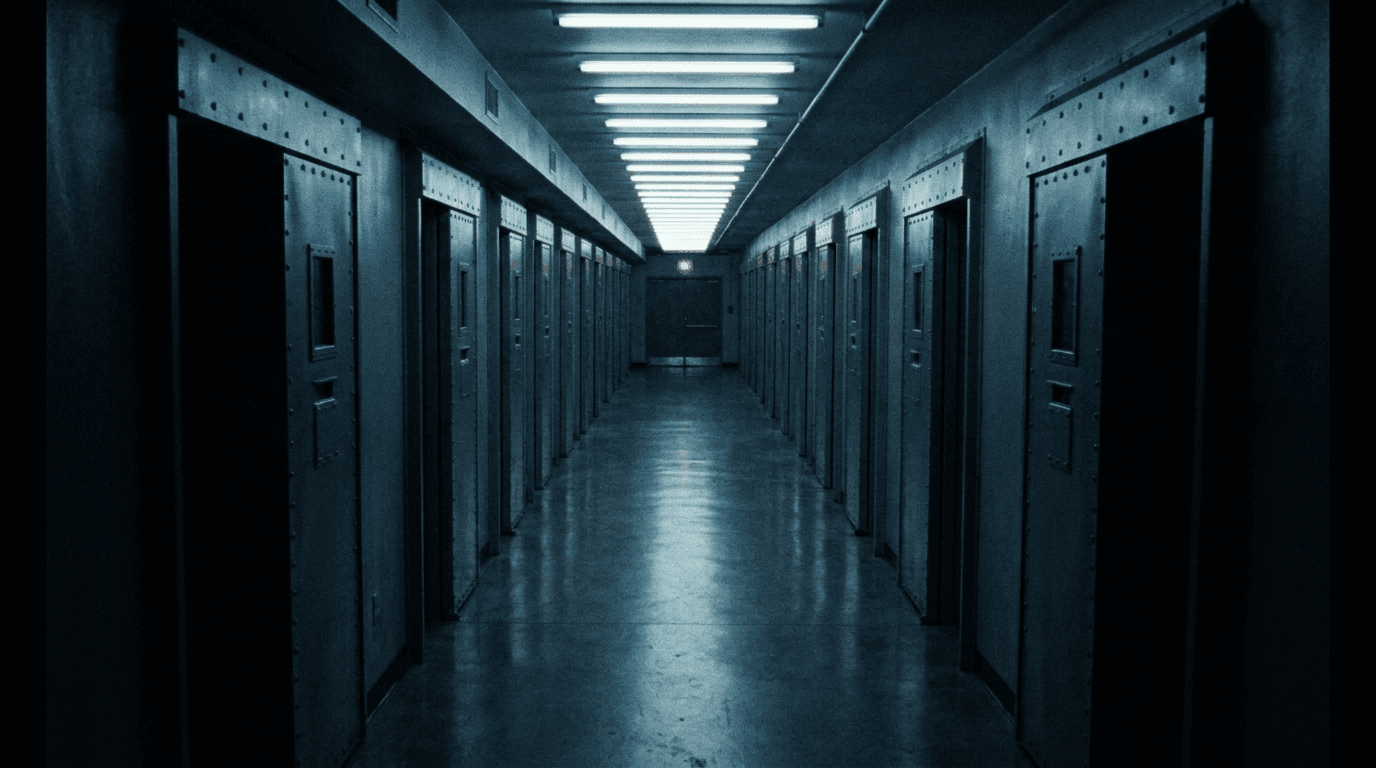
The theory of maximum-security incarceration is total control. The facility controls your movement, your communication, your access to the outside world, your ability to coordinate action with anyone beyond the perimeter. You are, in the language of the system, contained.
The practice is considerably more complicated.
Maximum-security federal facilities in the United States house some of the most capable, intelligent, and operationally sophisticated individuals in the country's criminal and national security dossiers. These are not people whose capability disappears because they have been transferred to a controlled environment. They bring the capability with them. And a controlled environment, for a sufficiently intelligent operator, is not a constraint — it's a structured problem to be solved.
The history of incarcerated individuals maintaining criminal networks, coordinating operations, and exercising significant extra-institutional power is not fiction. It is well-documented across federal prosecutorial records, organized crime history, and national security reporting. The federal prison system has held people who, from inside, continued to direct enterprises that operated across multiple countries.
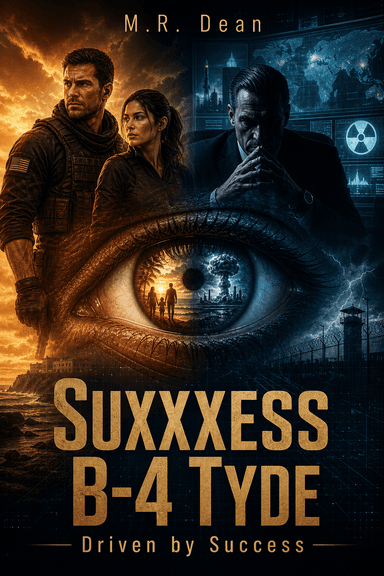
What Suxxxess b-4 Tyde does is take this real phenomenon and build it into a villain of sufficient intelligence to maximize it.
The Tyde Model: How Intelligence Defeats Confinement
Vick Tyde is, by the novel's own framing, a Harvard-grade criminal mind. This is not hyperbole in the context of the novel — it's a precise description of the kind of analytical capability he brings to the problem of operating from inside a federal prison.
The first thing an operator of Tyde's intelligence does when placed in a controlled environment is conduct a thorough capability audit. What can be done from here? What channels of communication exist, officially or unofficially? Who else is inside this environment, and what do they bring? What relationships can be built, and toward what ends?
Tyde's answers to these questions produce his internal structure. Diamond is his prison lieutenant — the enforcer of his internal authority. Beast is the physical capability, five-foot-eight and two hundred and fifty pounds, the credible threat that makes internal compliance rational rather than aspirational. Mrs. Cali is a strategic recruitment — a transgender inmate whose specific circumstances and capabilities Tyde has identified as useful to the operation in ways the prison administration hasn't anticipated.
"Welcome to the regime, Cali." (Vick Tyde, Ch. 49)
That's not recruitment language. That's conquest language. Tyde doesn't build alliances — he builds a regime. The distinction tells you everything about how he understands power and how he intends to exercise it from inside.
Elektra on the Outside: The Distributed Power Structure
The most sophisticated aspect of Tyde's architecture is the distributed nature of it. His power is not located in the cell. The cell is the brain. The body is distributed across the outside world, and Elektra is the primary interface through which brain communicates with body.
Elektra handles the external logistics: the plutonium acquisition running through Vlademir Ivanoff, the coordination with Tyde's brother Sid, the operational decisions that require physical presence in the world. She is not a subordinate executing orders in the conventional sense — she is the field manifestation of Tyde's intelligence, the person who translates what he understands into what actually happens.
This distributed structure is deliberately designed to be resilient. If a single node is compromised — if Ivanoff is flipped, if Sid is identified, if one courier is intercepted — the operation continues. Tyde has built redundancy into the architecture in the way that a sophisticated intelligence operation is designed to work.
The federal government's problem is not that they don't know Tyde is dangerous. They know. The problem is that the distributed structure means there is no single decisive action that ends the threat. Every element they address is connected to others they haven't located yet.
"You make that shake, and I'll make this whole prison shake." (Vick Tyde, Ch. 51)
The double meaning here is precise. The prison itself has become, under Tyde's management, an instrument. Not a container — an instrument.
Real Cases Where Incarcerated Individuals Maintained Criminal Networks
The fiction is grounded. Documented cases from organized crime prosecution history, cartel indictments, and national security matters consistently show that physical incarceration is insufficient to neutralize sufficiently motivated and capable operators.
Cartel leadership structures have continued to function after the incarceration of senior figures, with successors and distributed cells maintaining operations and even continuing to direct violence against rivals and witnesses from inside facilities. In organized crime history, prison has functioned more as a management challenge to be solved than as an operational termination.
The capacity to do this depends on intelligence, organizational design, the cultivation of relationships inside the facility, and the maintenance of trusted channels to the outside. All of these are capabilities that Tyde possesses and has deployed. Dean is not writing fantasy here. He's building a fictional version of a real operational phenomenon and populating it with a villain who is specifically calibrated to maximize it.
How Oz, Orange Is the New Black, and Prison Break Got It Wrong
The dominant pop-culture representations of incarceration tend toward one of two failure modes.
Oz operated in the register of sustained brutality — the prison as a place where violence is the primary organizing principle and every other form of power is subordinate to it. The show was serious about some things, but its vision of prison power was essentially physical.
Orange Is the New Black was primarily a social satire — the prison as a space for exploring identity, community, and bureaucratic dysfunction. Power in that context was administrative and interpersonal, not operationally sophisticated.
Prison Break had the premise — the incarcerated genius with a plan — but executed it as an escape narrative. The protagonist's intelligence is deployed in service of getting out. The prison is an obstacle to be escaped, not a platform to be operated from.
Vick Tyde is not trying to escape. That's the crucial divergence. He has decided that operating from inside the federal system — from a position of confirmed incarceration, with the government's attention already on him — is actually optimal. Escape would increase his exposure, require him to become a fugitive, and compress the operational window before the full weight of federal resources was deployed against him.
Staying inside and running the operation from there is the more sophisticated play. The government is already watching him. He makes himself visible and harmless in the institution while the real operation runs through channels they haven't fully mapped.
Why Suxxxess b-4 Tyde's Prison Scenes Hit Differently
The prison scenes in this novel are power scenes. Every interaction — between Tyde and Diamond, Tyde and Beast, Tyde and Mrs. Cali, Tyde and whatever institution official has made the mistake of thinking they understand who they're dealing with — is a demonstration of how intelligence converts structural disadvantage into organizational advantage.
The reader of genre fiction who encounters Tyde's prison sequences is not watching a criminal fail to escape. They're watching a mind work. The specific pleasure of these scenes is the pleasure of watching sophisticated thinking — watching someone identify constraints and engineer around them with resources that other operators wouldn't have recognized as resources at all.
This is the thriller villain at his best: not someone to be reviled as simple evil, but someone whose capability demands respect even as the reader is rooting against him. Tyde in his cell is more threatening than most thriller villains at the height of their operational freedom — because he has removed the variable of physical freedom from his threat calculus entirely.
The cell is just a room. The operation is global.
The Tyde Regime: Roles Inside the Operation
| Role | Person | Function |
|---|---|---|
| Brain / director | Vick Tyde | Runs a global operation from a federal prison cell; sets strategy |
| Internal enforcer | Diamond | Prison lieutenant; maintains Tyde's internal authority |
| Physical threat | Beast | 5'8", 250 lbs; makes internal compliance credible |
| Strategic recruit | Mrs. Cali | A transgender inmate whose capabilities Tyde identified as useful |
| External interface | Elektra | Handles outside logistics — plutonium acquisition, coordination with Sid |
| Arms supplier | Vlademir Ivanoff | Russian contact managing the plutonium channel |
Buy on Amazon — or read Chapter 1 free at /the-book#chapter-1.