The villain you remember isn't the one who kicked down the door.
It's the one who made the door unnecessary. The one who already owned the building, the security codes, and the man who was supposed to stop him — all while sitting in a room he supposedly couldn't leave.
Constraint is not a weakness in fiction. Applied correctly, it's the most precise instrument of dread a writer can reach for. And in 2026, when audiences have absorbed decades of increasingly elaborate threat scenarios — bioweapons, cyberattacks, nuclear blackmail — the bar for what makes a villain genuinely frightening has risen. Power alone doesn't cut it. Spectacle alone doesn't cut it. What cuts is the cold, surgical awareness that someone you cannot touch is already multiple moves ahead of everyone trying to stop them.
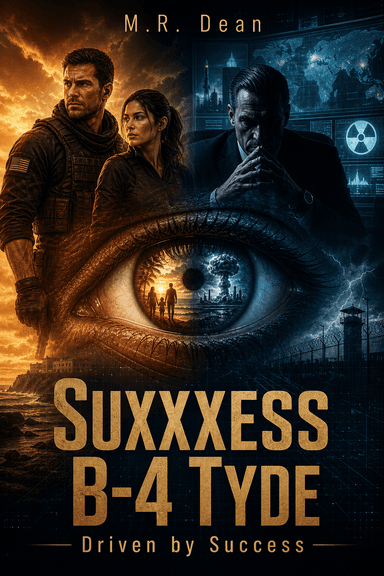
That's the architecture Vick Tyde inhabits in Suxxxess b-4 Tyde: Driven by Success by M.R. Dean. And it's worth understanding why it works.
Why Confinement Makes Villains More Dangerous, Not Less
There's a conventional assumption in storytelling that the villain's threat scales with his freedom of movement. The more places he can go, the more dangerous he is. This is wrong, and the best thriller writers have always known it.
Hannibal Lecter changed everything precisely because he was already caged. Clarice Starling descends to him. She needs something from him. The cell isn't a prison — it's a throne room where Lecter controls every variable: the temperature of conversation, what he reveals, what he withholds, and at exactly what moment he decides to help. His confinement concentrates his menace into pure psychology. He doesn't need to move. He just needs you to come to him.
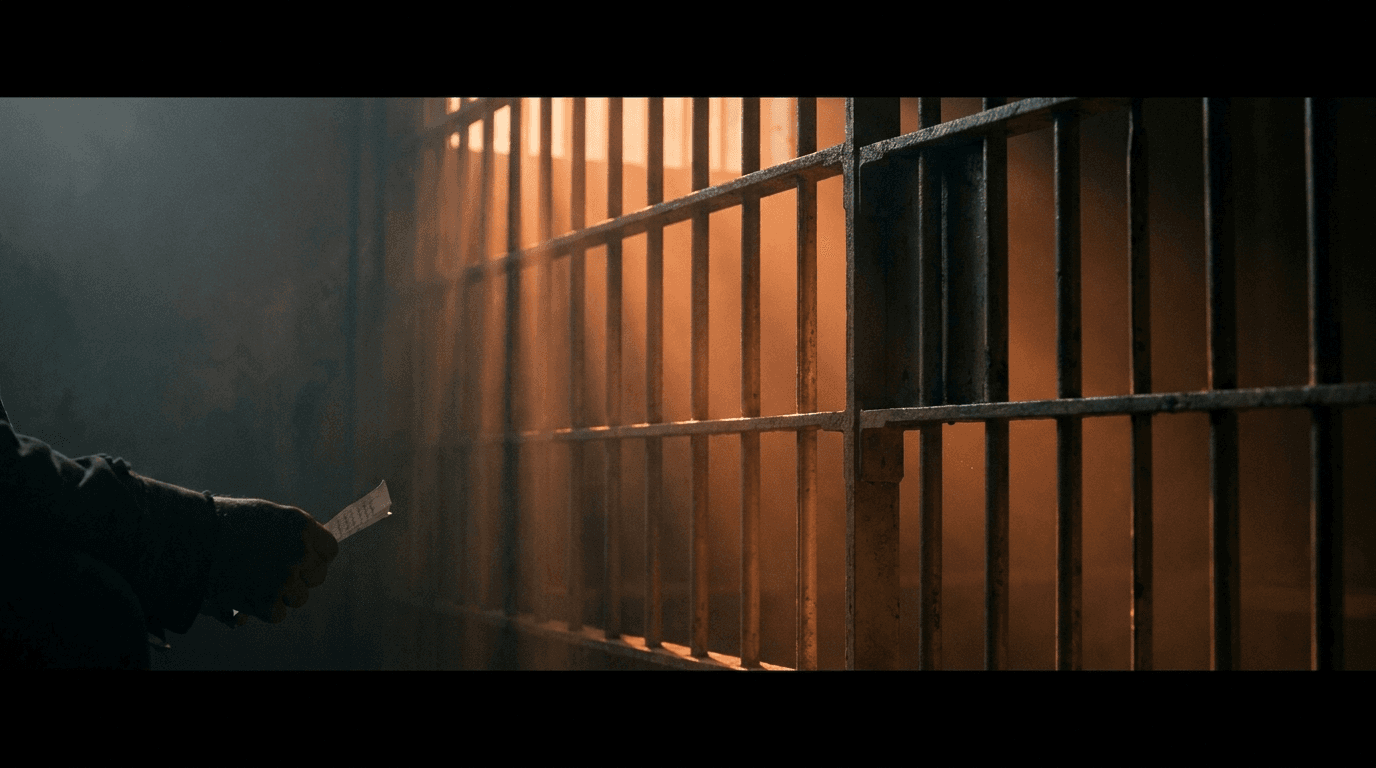
Vick Tyde occupies the same structural position in M.R. Dean's novel — a genius-grade criminal mastermind operating from inside a maximum-security federal prison in Sioux Falls, South Dakota. The U.S. government believes containment equals neutralization. They are wrong. And the story's central terror is not that Tyde might escape. It's that he doesn't need to.
From inside that cell, Tyde is running the most sophisticated weapons-acquisition and geopolitical-leverage operation in the book's world. He has lieutenants on the outside. He has a spouse handling the hardest logistics. He has infrastructure, financing, and patience. He has Diamond — his albino prison lieutenant who manages the internal hierarchy — and Beast, the 5'8" 250-pound enforcer who handles situations requiring a different kind of communication.
The prison is not where Tyde is trapped. The prison is where Tyde is safest.
The Intelligence Threshold: When a Villain Is Smarter Than the Plot
A thriller villain fails the moment the reader can see the plot mechanics working around him. When a character exists to be thwarted, to make miscalculations on cue, to hand the protagonist the thread that unravels everything — the reader checks out. Not because the villain lost, but because he was never really a threat. He was an obstacle with a face.
The intelligence threshold is the line where a villain becomes genuinely threatening rather than dramatically convenient. Cross it, and something shifts in the reading experience. You stop predicting outcomes and start dreading them.
Stringer Bell crossed it in The Wire. Here was a man who brought economics textbooks into a drug organization, who understood market theory and organizational behavior at a graduate level, who saw the business more clearly than any law enforcement officer pursuing him. His tragedy isn't that he was caught — it's that he was right about almost everything, and it still wasn't enough. That gap between intelligence and outcome is where great villain writing lives.
Marlo Stanfield crossed it differently. Marlo didn't theorize. He implemented. His command of information — who knew what, when, what it cost them — made him effectively invisible to systems designed to catch people who make noise. He made no noise. He just accumulated.
Anton Chigurh crossed it by removing the concept of personal motivation entirely. He isn't violent because he's angry or greedy or afraid. He operates on a different logic — one so internally consistent that it terrifies precisely because you cannot appeal to it. There is no negotiation available. There is no lever.
Keyser Söze crossed it through architecture — building a story that turned the audience's own pattern recognition against them. The threat was always in plain sight. The concealment was structural, not circumstantial.
Vick Tyde's intelligence functions differently from all of them, but it belongs in the same conversation. He has what might be called Harvard-grade operational thinking — the capacity to run a distributed criminal network as a project management problem, to identify supply chains for materials most people don't even know are acquirable, and to do it from a cell with limited physical access to the outside world.
"You make that shake, and I'll make this whole prison shake." — Vick Tyde, Ch. 51
That line isn't bravado. It's a statement of fact about the infrastructure he's built. He means it literally.
Vick Tyde and the Architecture of Control
What M.R. Dean builds with Tyde is not a portrait of a man who lost everything and wants revenge. That's a smaller story. Tyde's architecture is about world-domination — a phrase that sounds operatic until you consider the actual mechanisms he's assembling: bomb components, plutonium acquisition, international arms dealing, a network that reaches from a federal prison in South Dakota to a cruise ship in international waters.
The scope is the point. This is not a man nursing a grievance. This is a man building a regime.
"Welcome to the regime, Cali." — Vick Tyde, Ch. 49
That single line carries weight because by the time Tyde says it, the reader understands what the regime means. It's not metaphor. The federal government understands it too.
"If Tyde does manage to get out and get ahold of the materials he needs, it could be the start of World War III." — Secretary of Defense, Ch. 59
The thriller engine runs on one question: can Perry Wade — retired, damaged, in medical leave, fighting alcoholism, and emotionally wrecked by what happened to the woman he loves — stop a man who has been building this network for years, from inside an institution designed to hold the most dangerous people in the country?
That question only works if Tyde is genuinely dangerous. Dean makes sure he is.
The Villain Spouse: How Elektra Changes the Calculus
One of the recurring weaknesses in thriller villain construction is the isolated genius — the man who operates alone, who trusts no one, whose grand design collapses at the moment he's forced to rely on another human being. It's a clean narrative device, but it removes an entire dimension of threat.
Tyde doesn't operate alone. He has Elektra.
Elektra is Tyde's wife and his primary external operator — the one handling logistics that can't be managed from inside Sioux Falls. She is acquiring plutonium. She is managing the network's external relationships. She is, effectively, the operational arm of everything Tyde's mind designs.
This is not a new concept — great villains have often had equally capable partners — but it matters enormously to how the threat reads. Because now there are two people to find, two operational nodes to disrupt, two sources of intelligence that the protagonists need to penetrate. And Elektra operates in the world Perry Wade has to navigate on the outside, while Tyde controls the prison axis from within.
The villain-and-spouse structure also adds a dimension that isolated villains can't access: loyalty as infrastructure. Elektra isn't a subordinate. She's a partner. That makes the whole apparatus harder to fracture.
What Plutonium Means as a Plot Device (and Why It Works)
Weapons of mass destruction are a tired thriller MacGuffin when they're used lazily. The reader has seen the ticking nuclear clock enough times to have developed immunity. What makes plutonium acquisition work as a plot device here is not the material itself — it's what the acquisition reveals about Tyde's network.
To acquire plutonium, you need international contacts with arms dealers who operate outside state authority. You need financing that moves without triggering surveillance. You need a supply chain that doesn't get flagged at any of the dozens of checkpoints designed specifically to catch this kind of transaction. That's Vlademir Ivanoff — the Russian arms dealer whom Perry Wade has to run an undercover operation against, aboard a cruise ship in international waters, to gather the intelligence that might stop the whole network.
Fort Lauderdale to international waters. A retired super-agent, medically compromised, playing a role he's barely fit to play. This is the operational canvas Dean builds, and it's one of the places where the thriller mechanics are doing serious work beneath the action surface.
Five Thriller Villains Who Earned Their Menace
The benchmark list for Tyde's company:
Hannibal Lecter (The Silence of the Lambs) — Confinement as amplification. He never needed freedom. He needed access to one person's mind.
Anton Chigurh (No Country for Old Men) — Menace through philosophical consistency. He cannot be reasoned with because his reasoning is internally complete.
Keyser Söze (The Usual Suspects) — The entire architecture was the threat. The man was a story told by someone who needed you to believe it.
Stringer Bell (The Wire) — Intelligence applied to a broken system. He understood the game better than anyone, and that's what made his end complicated.
Marlo Stanfield (The Wire) — Total information control. Invisible to detection because he refused to perform the behaviors surveillance is designed to catch.
Vick Tyde belongs on that list. Not as a copy of any of them, but as a new instance of the same principle: the most dangerous antagonists in fiction don't need conventional power. They need systems, patience, and one thing the heroes consistently underestimate — time.
Perry Wade doesn't have time.
"Fancy Face, there is not a day that goes by that I do not feel fear from the thought of Tyde getting out of prison." — Ch. 1
That line opens the book. By the time you finish it, you understand that the fear isn't about Tyde getting out. It's about what he's already done while staying in.
Suxxxess b-4 Tyde: Driven by Success is available now.
How Vick Tyde's Network Is Built
| Component | Who / What | Role in the operation |
|---|---|---|
| Command node | Vick Tyde | Harvard-grade operational thinking from inside a federal prison |
| External operator | Elektra (spouse) | Handles outside logistics; acquiring plutonium and managing network relationships |
| Internal enforcer | Beast | 5'8", 250 lbs; handles situations requiring physical communication |
| Internal hierarchy | Diamond | Manages prison-side organization and Tyde's authority |
| Arms supply chain | Vlademir Ivanoff | Russian arms dealer; the external link Perry Wade must penetrate undercover |
| Stated threat level | Secretary of Defense, Ch. 59 | "Could be the start of World War III" if Tyde acquires what he needs |